
三毛流浪记
China's earliest tinned iron armor found in Zhejiang: 1,700-year-old anti-rust tech revealed_我的网站

一 |
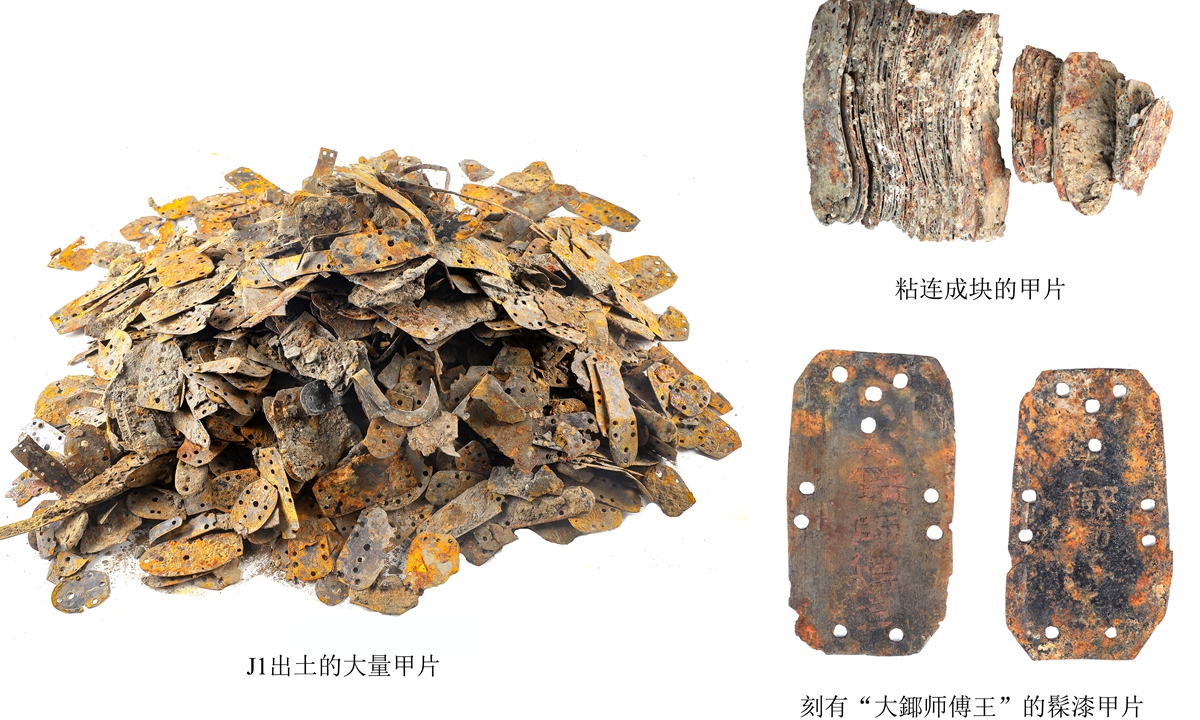
While China has a long history of making tinned bronze and tinware, there has long been a lack of reliable historical records or physical evidence to prove early local production of tinned iron artifacts. The newly discovered armor plates can fill this gap, demonstrating that, by no later than the Wu period, local craftspeople in Zhejiang Province had mastered the art of tin-plating iron surfaces. This reflects the region's advanced metallurgical skills at that time, Ge Shuaikun, a researcher at the Shaoxing Institute of Cultural Relics and Archaeology, told the Global Times on Tuesday.
Over the last three years, archaeologists working at the Jizhong ruins site have excavated hundreds of tinned iron armor plates from ancient wells and ash pits. A preliminary investigation confirmed that the surfaces of these plates contain high levels of tin. Subsequent laboratory analyses were conducted in collaboration with the Shaoxing's institute and the Institute for Cultural Heritage and History of Science & Technology at the University of Science and Technology Beijing with methods such as Scanning Electron Microscopy with Energy Dispersive Spectroscopy (SEM-EDS), X-ray Diffraction (XRD), and Micro-CT to deeply examine the samples' materials, structures, and technological traces.
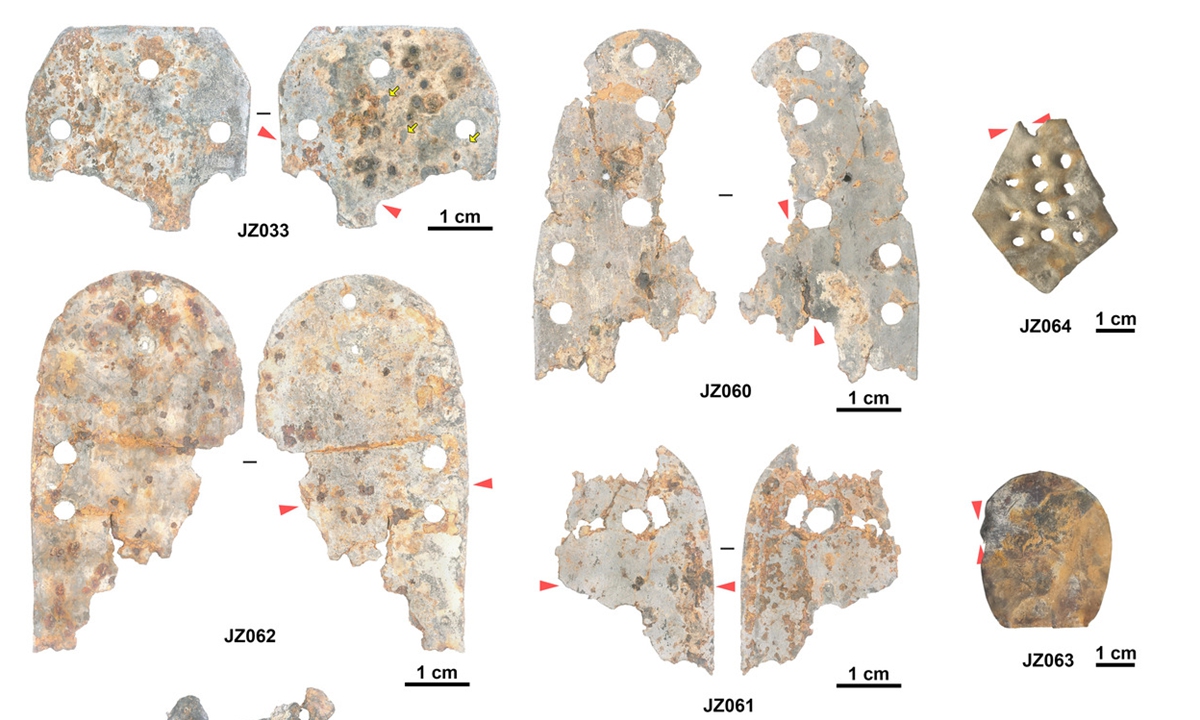
Research shows that the craftspeople immersed iron armor plates in molten tin, thus ensuring complete coverage of the surface with a continuous tinned layer. This coating isolated the iron from exposure to air and moisture, dramatically boosting corrosion resistance. Many of the excavated tinned armor pieces still show a clear, bright silver-white finish.
One major reason for tin-plating the armor was to prevent rust. At the same time, the silvery white shine of tinned iron offered a more striking, beautiful appearance, standing out from the typical dark iron armor of the era. This visual distinction may have marked these pieces as a higher-grade military asset, according to an article from the University of Science and Technology Beijing's official website.
The article said that in earlier eras, from the pre-Qin to Han dynasties, tin was widely used as a surface coating on bronzeware and ceramics. Researchers believe the tin-plating of iron armor discovered at the Jizhong ruins site during the Wu period of Three Kingdoms built upon this local tin-coating tradition, representing an adaptation of those techniques across different materials. The process likely benefited from technological exchange among various specialized workshops at the site, including those making bronze castings, iron weapons, and other metallurgical products.
。
一键部署OpenClaw 不推品牌不讲参数堆砌,就聊怎么选到对的那个 | 站长网出品 | 2026年8月 CDN不是"装了就完事"的东西 先明确一个基本认知:CDN不是万能的。

二 | 如果你的源服务器用的是最低配的共享主机,再怎么加CDN也不会把速度提到很快。CDN解决的是内容分发的"最后一公里"——把静态文件分发到离用户最近的节点,减少地理距离造成的延迟。源站本身性能不行的话,瓶颈在源头不在分发环节。 所以看这篇文章之前,先检查一下你的服务器响应时间。

三 | 页面生成时间在200毫秒以内的话,CDN接入效果会很明显。超过500毫秒的话,先把源站优化一轮再说。 CDN到底在加速什么 很多人以为CDN加速了整个网站。实际上默认情况下CDN主要加速的是静态资源——图片、样式表、JS文件、字体文件。这些文件占了页面加载体积的大部分,而且每次访问都是一样的内容,天然适合缓存到CDN节点上分发。 动态页面(比如用户登录后看到的个性化内容)默认不会被CDN缓存。如果你的网站是论坛、电商这类大量动态内容的应用,CDN在"动态加速"方面的能力就很重要了——可惜不是所有CDN都提供这个功能,而且通常是付费功能。 选择CDN前要明确的三个问题 你的用户主要在哪里 这个问题决定了你选CDN时最该看什么指标。 用户大部分在中国大陆:选在国内有丰富节点的CDN,或者支持国内线路优化的服务商。国际通用的CDN在国内访问的时候往往并不快——因为节点可能部署在香港或海外,中间要经过跨境线路。 用户主要在海外:选节点覆盖广的国际CDN。欧美用户多的看欧美节点密度,东南亚用户多的看东南亚和香港节点覆盖。 用户国内国外都有:考虑混合方案。最常用的做法是加一个智能DNS解析,国内用户走国内加速节点、海外用户走全球CDN。 你的网站类型 纯内容站(博客、资讯):标准CDN加速就够了。重点关注缓存策略和静态资源压缩。 电商/社区站(含动态内容):需要CDN支持动态请求加速、源站负载分担。大部分CDN的基础版不支持,需要看付费版本的功能。

四 | API/工具站(大量HTTPS请求):关注CDN的HTTPS性能和回源效率。 高并发/易被攻击的站:选择带DDoS防护能力的CDN。DDoS防护等级和CC攻击防御能力是最关键的参考指标。 你的预算 免费方案:国内有些CDN提供了包含一定流量的免费套餐,国际CDN里Cloudflare的免费版功能最宽松。适合新站和小流量站,先跑起来再说。 几十块到几百块一个月:足够覆盖中小型网站的需求。

五 | 选带流量包套餐的CDN比较划算,按需购买流量包而不是按峰值带宽付费。 高需求定制方案:预算几千到上万。

六 | 一般是企业站或者高并发应用,选支持定制策略的企业版CDN。

七 | 几个好用的免费工具帮助判断 全球节点延迟测试 用在线拨测工具(Ping.cn、ITDOG等),输入你的域名,选国内各地节点做一次全面测试。看两个指标:各地延迟的平均值和最高值。延迟越低、越均匀越好。

八 | DNS解析速度测试 用dnsperf.com之类工具测试CDN的DNS解析速度。

九 | DNS解析是访问网站的第一步,这一步慢了后面的加速效果都会打折扣。 缓存命中率监控 接上CDN跑一周,在CDN后台看缓存命中率。内容站正常应该在80%以上。

十 | 如果长期低于60%,说明缓存策略没配好,网站速度并不会因为接了CDN就有明显提升——因为大部分请求还是回了源站。 配置CDN时最容易踩的三个坑 SSL证书配置不当 CDN和源站之间也需要HTTPS加密。如果只配了用户到CDN这段的SSL,CDN到源站是HTTP明文传输,中间的安全性就漏了一块。

十一 | 两边都要配SSL,这个点经常被漏掉。 缓存规则太粗 默认全缓存或者全不缓存都是不对的。图片、CSS、JS这些静态文件可以缓存一星期甚至一个月;HTML页面可以缓存几小时或一天;动态API请求完全不应该缓存。缓存策略配错了,轻则页面更新不及时,重则出现已登录用户看到别人信息的严重问题。 忘了配置缓存刷新 网站更新内容之后,需要让CDN重新去源站拉取最新版本。手动刷新费时费力,找支持API自动刷新的CDN方案,或者配置合理的缓存过期时间,让旧内容自动过期后重新从源站拉取。 要不要一上来就买付费CDN 我的看法是:小站和新站先从免费方案起步,等流量稳定了再评估是否需要付费升级。 判断要不要升级的核心信号有两个:一是用户反馈部分地区访问速度慢(可以结合拨测工具验证);二是你的网站遭到持续攻击、免费方案防护能力不够。

十二 | 在这两种情况出现之前,免费方案够用了。把省下来的预算用在服务器升级和内容创作上,产出更高。 总结 CDN选型的关键不是比参数表,而是搞清楚三件事:用户在哪里、你需要加速什么类型的内容、以及预算有多少。 顺序不要搞反——先确认清楚自己的需求,再去找符合这些条件的CDN,而不是看了一堆产品介绍之后选一个"看起来功能最多的"。 最后加一句:接入CDN之后记得跟踪效果。看两个最关键的指标就行:页面加载时间的变化(接入前后对比)和缓存命中率(看是不是大部分请求命中了缓存)。数据说话,效果不好就调整配置或者换方案。
申请创业报道,分享创业好点子。点击此处,共同探讨创业新机遇!。
Current article:http://5j0sl.shuazhepenxingshuaisenqienai.buzz/1rn/ri64dpf.html
Published on:09:56:54
 斯基拉:曼联球探现场看米兰vs亚特兰大,考察埃德松和雷特吉
 为什么AI还不会科学发现?这是人工智能的终极考题
 西门子能源据称将聘请高盛出售蒸汽涡轮机业务股权
 探索自然 感知科学
 英国股市收低,截至收盘英国 100下跌1.20%_Group_股票
 双色球一等奖8注658万元,奖池5.66亿元
- ·国补政策10月5日最新消息:国补结束了吗?国补第四批690亿10月继续领取,2025年年底结束
- ·以总理内塔尼亚胡警告哈马斯停止“放风筝”:不停止将加大对相关人员的打击力度;哈马斯称只是“加沙难民营里儿童的玩具”
- ·Aaj Ka Love Rashifal 28 August 2025: पार्टनर से करेंगे दिल की बात, जानें इन 4 राशियों की लव लाइफ हाल
- ·재회동 마친 김윤덕·오세훈
- ·丽水市举办福彩公益金资助项目开放日活动
- ·开展适龄儿童脊髓灰质炎灭活疫苗补种工作
- ·中国田径“新老交替”在路上
- ·女生素颜艺考被擦妆5次:因皮肤状态太好被怀疑化妆
- ·俄罗斯外交部呼吁阿塞拜疆和亚美尼亚严格遵守停火协议
- ·中秋假期全省消费市场活力足
- ·江西铜业:上半年归母净利润86.32亿元,同比增长106.77%
- ·美国总统拜登拒绝相信他糟糕的民调数字
- ·海航控股:上半年归母净利润2.7亿元,同比增长374.43%
- ·怎么找擅长套利策略的期货客户经理?
- ·Robo.ai:上半年净利润4670万美元,同比扭亏为盈
- ·'Not Putin Who Raised Taxes': Swedish Opposition Leader Blasts Gov't for Scapegoating Russia
- ·台风“沙德尔”靠近浙闽沿海 浙江启动海上防台应急响应
- ·马应龙:聘任周道年为公司总经理
- ·持续优化医保服务 提升群众幸福指数
- ·海天味业:上半年净利润41.9亿元,同比增长7.13%
- ·山西大同古城所有区域被划为地下文物保护区
- ·【讲习所·中国与世界】习近平:建设更具内涵更有活力的中约关系
- ·英伟达信用评级“中性”?Q2财报发布在即 大摩“投下炸弹”!
- ·在富力宏和亮星蓝色伴侣20 Pro发布后,华为为女性打造了一款“温度”手机。
- ·哈空调:上半年亏损5253.81万元
- ·请3休13!“超长假期”马上来了
- ·《人民日报》评论:我喜欢“满脸大哭”,但我不是00年代后的一代。
- ·苹果已经建立了一个独立的网站专门销售新的iPad Pro。
- ·Xi holds talks with Jordan's king; visit empowers development co-op to serve as a pillar of regional stability: expert
- ·“钰”见雄安Vlog | 送雄安一号上太空
- ·芯片90%面积都给了存储 HBM还是喂不饱GPU!原因竟是内存墙越砌越高
- ·交易马上裁掉?22岁的惠特摩尔,为何打不出来?